
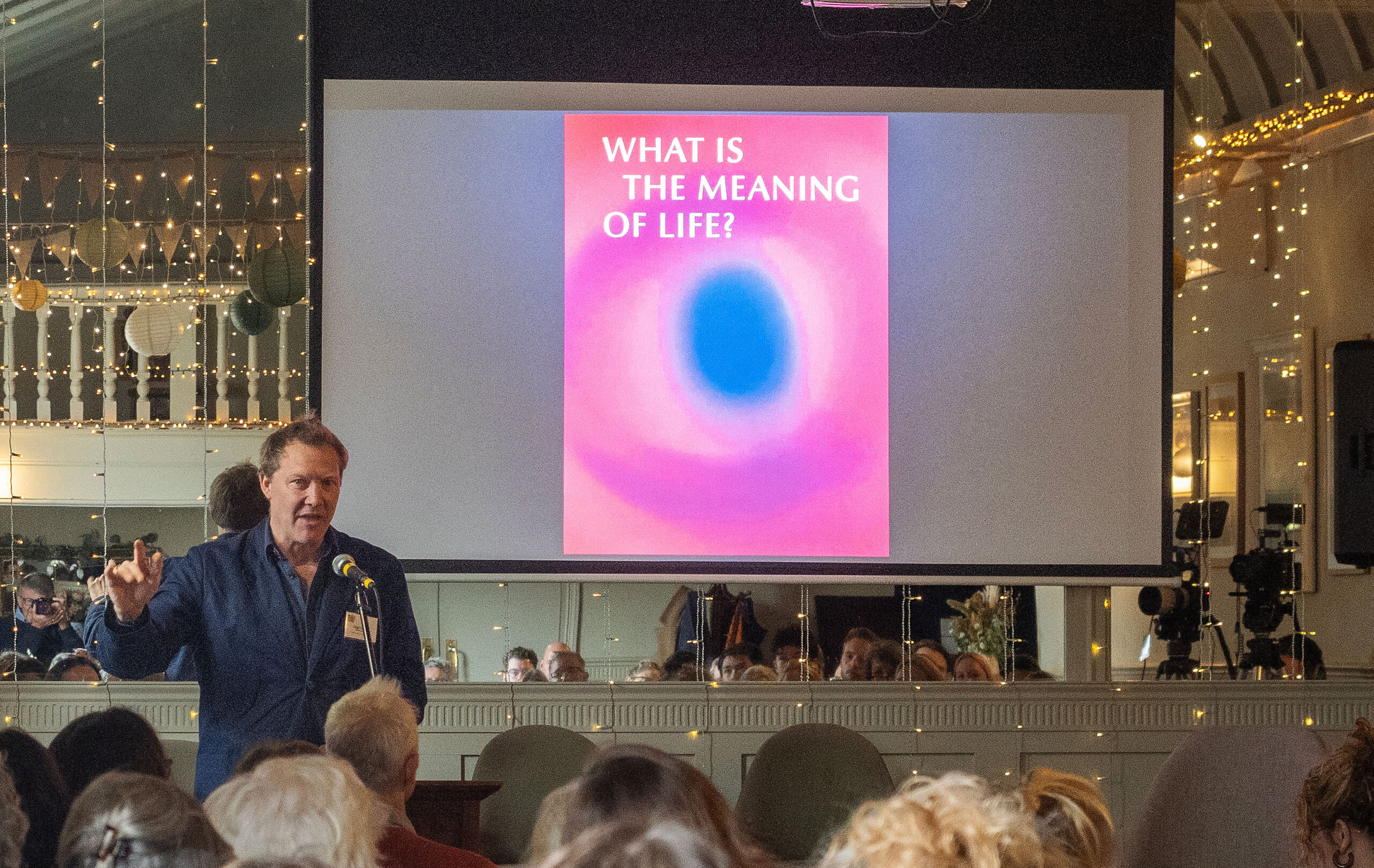
Jago Cooper, Director of the Sainsbury Centre
Art is more than something we look at. It has the power to change how we think, how we live and how we imagine the future. But are our cultural institutions doing enough to unlock that potential?
Walking along Cromer’s promenade in the misty rain, I came across a beacon of warmth, happiness and artistic joy: Cromer Artspace. It struck me as a wonderful metaphor for what art can do — bring people together, open up possibilities and make something unexpected happen.
But it also got me thinking about a bigger question: what do we actually want from art?
If we want to understand why access to art matters, we first need to understand what art is for. Is it simply something we look at? A reflection of the world around us? A pleasant distraction from the more serious business of life?
I don’t think so. I believe we’ve fundamentally underestimated what art can do.
We need to imagine something different
We are living through a period of extraordinary uncertainty. Our species is pushing the planet beyond its carrying capacity. We face ecological tipping points, technological disruption and profound questions about how our societies will survive and adapt.
Yet the systems we have built are remarkably resistant to change. We inherit institutions, economic models and familiar ways of thinking, and continue along the same pathways even when the world around us is changing beyond recognition.
So where do genuinely new ideas come from?
For me, art is central to the answer. Art is not merely a reflection of society. It is a mechanism for changing society. It gives us the ability to imagine alternative ways of thinking, living and understanding the world.
Every human society throughout history has created art. It is one of the ways we take our inner lives — our imagination, emotions and experiences — and give them form. Art allows us to encounter an imagination other than our own.
That is an extraordinary human capacity. And it is precisely what we need when the future demands that we think differently.
What if artworks were living things?
At the Sainsbury Centre in Norwich, where I am Director, this thinking has led us to question some fundamental assumptions about what a museum should be.
Traditionally, museums understand artworks primarily as objects to be preserved, protected and interpreted. That is important work, but I wanted to explore a different possibility.
What if we understood artworks as living entities — material expressions of the imagination and life force of the people who created them?
In 2022, we changed the principles guiding how we work with our collection. Our responsibility, we decided, was not simply to preserve and explain objects, but to give art its best life and enable people to encounter it in ways that might change them.
Since 2023, we have invited visitors to meet our collection as they might meet another person, rather than simply looking at it as a collection of inanimate objects.
Visitors might enter a glass case and experience what it feels like to become the artwork, reversing the usual relationship between observer and observed. Or they might lie beneath a Giacometti and be invited to tell a painting a secret they would never share with another human being, trusting the artwork to hold it.
These encounters are designed to interrupt our familiar habits and create space for something unexpected.
When we encounter art in this way, we can begin to question our own values, assumptions and relationships. We are exposed to perspectives shaped by different cultures, histories and imaginations. Art can help us step outside the small circles of experience in which we often live.
Start with the questions that matter
This philosophy also shapes our exhibition programme. Rather than beginning with a collection of objects to display, we start with a question that matters to human beings everywhere.
What is truth? What is the meaning of life? Can we stop people killing each other?
We bring together contemporary artists, historic collections and different cultural perspectives to explore these questions, creating opportunities for visitors to think for themselves rather than being told what to believe.
When we explored violence and genocide, for example, we brought together artistic perspectives connected with Rwanda, the former Yugoslavia, Israel and Palestine. Our role was not to deliver a definitive answer, but to create a space where people could encounter different ways of understanding the question and develop their own responses.
At the end of each exhibition, we invite visitors to write their answers on the gallery wall. The responses can be extraordinary: thoughtful, personal and deeply profound. You can see that people have genuinely spent time thinking about questions that matter to them.
Since introducing this approach, our visitor numbers have approximately doubled. What excites me most is that many people come not because they consider themselves interested in art, but because they are interested in the question being explored.
They come for the question. Art gives them a way into it.
Perhaps this is an important lesson for anyone trying to widen participation in the arts. We need to create reasons for people to engage that connect with their own lives, experiences and curiosity.
Access means changing the rules
For people living in rural and coastal communities, access to art is often discussed in practical terms: distance, transport, funding and the availability of cultural venues. These barriers are real, and we must do more to address them.
But access is also about whether people feel that art is for them. Do they see their experiences reflected in the questions being explored? Can they contribute their own perspectives, rather than simply receive someone else’s interpretation?
We often focus on individual projects, outreach programmes and making cultural spaces more welcoming. All these things matter. But what if some of the barriers are embedded in the way our institutions understand art in the first place?
If we want art to play a transformative role in society, we need to be prepared to rethink the structures, assumptions and priorities that shape our work.
This is why conversations such as Curating Beyond the Frame matter. Organisations like Cromer Artspace demonstrate the creative potential that exists beyond traditional centres of cultural power. They challenge us to consider who gets to make art, who gets to experience it and whose imaginations shape our cultural life.
Art is one of our best hopes for the future
I believe we need to be much more confident about the role art can play in society.
Art is not simply a luxury, a pleasant distraction or something we support once the more serious priorities have been taken care of. It is one of the ways human beings imagine alternatives, challenge assumptions and develop new ways of understanding the world.
As we confront the enormous challenges facing our species, we need that capacity more than ever. We cannot expect the future to be solved by repeating the patterns of the past. We need imagination, and we need places where people can encounter ideas that unsettle, inspire and transform them.
The challenge is not simply to get more people through the door.
It is to unlock art’s potential to change how we think — and, ultimately, how we live together.
Art does not simply reflect the society we have created. It helps us imagine the society we could create next.