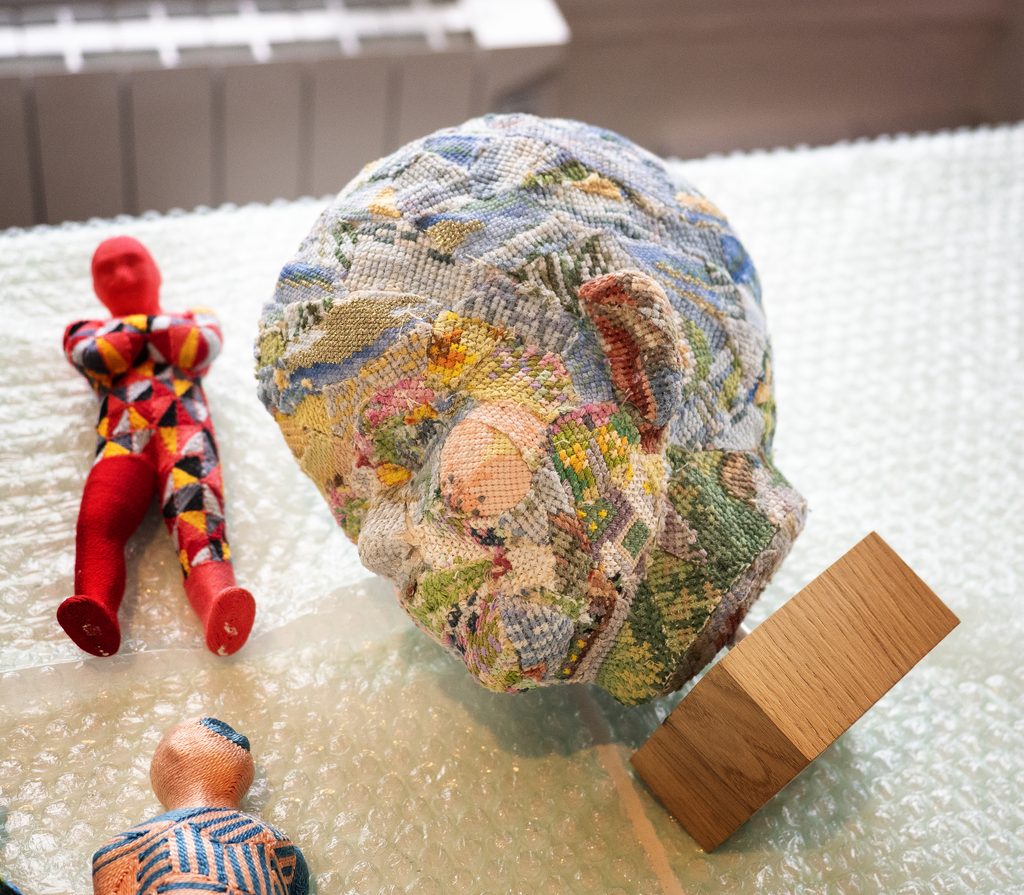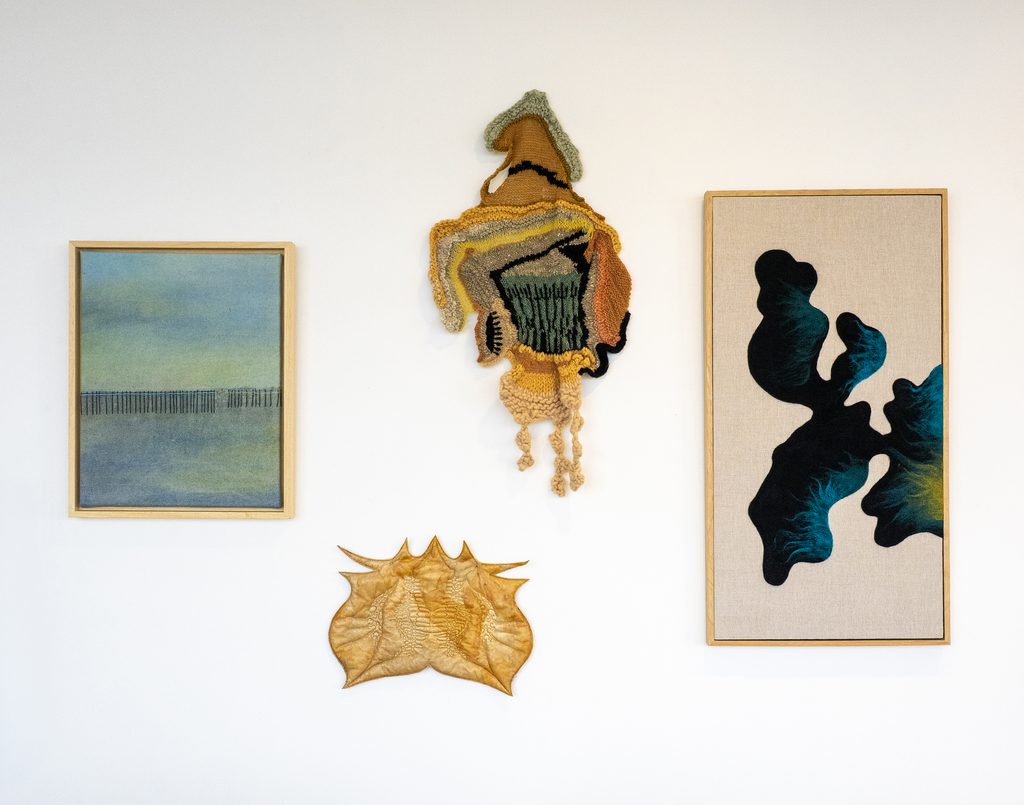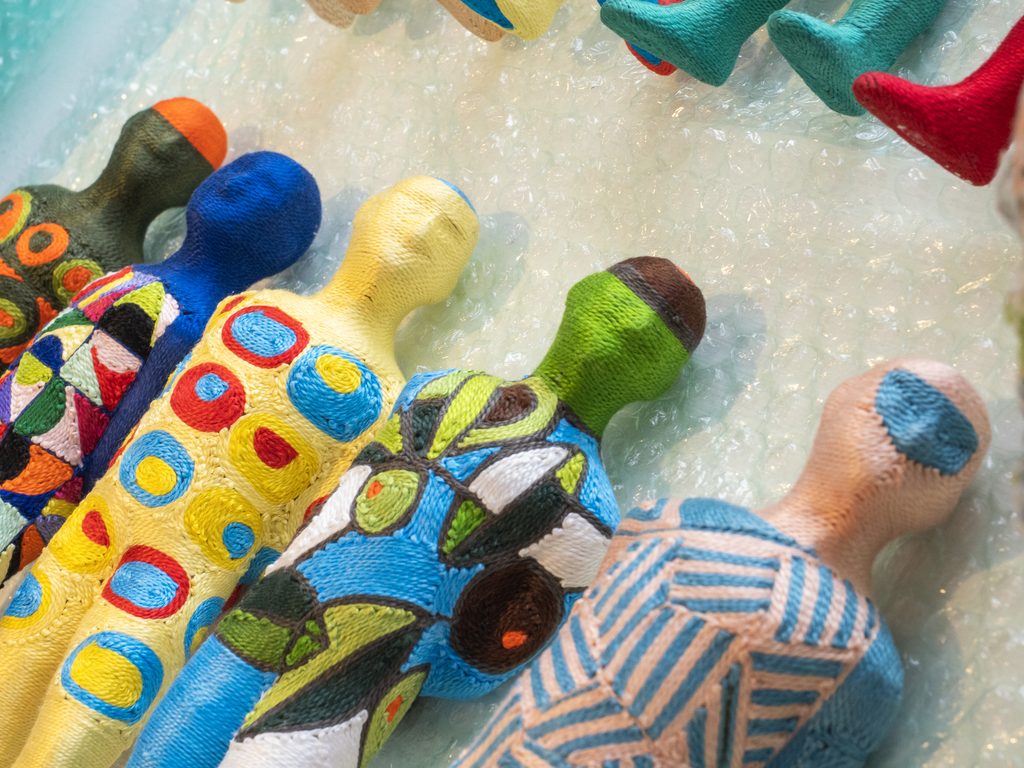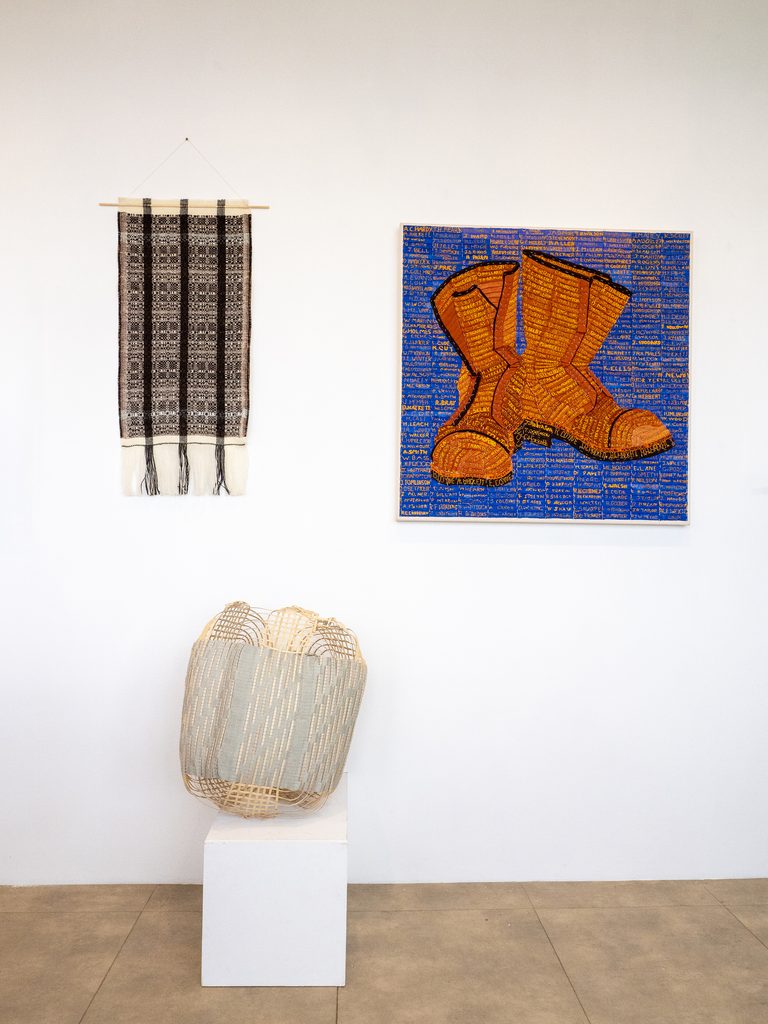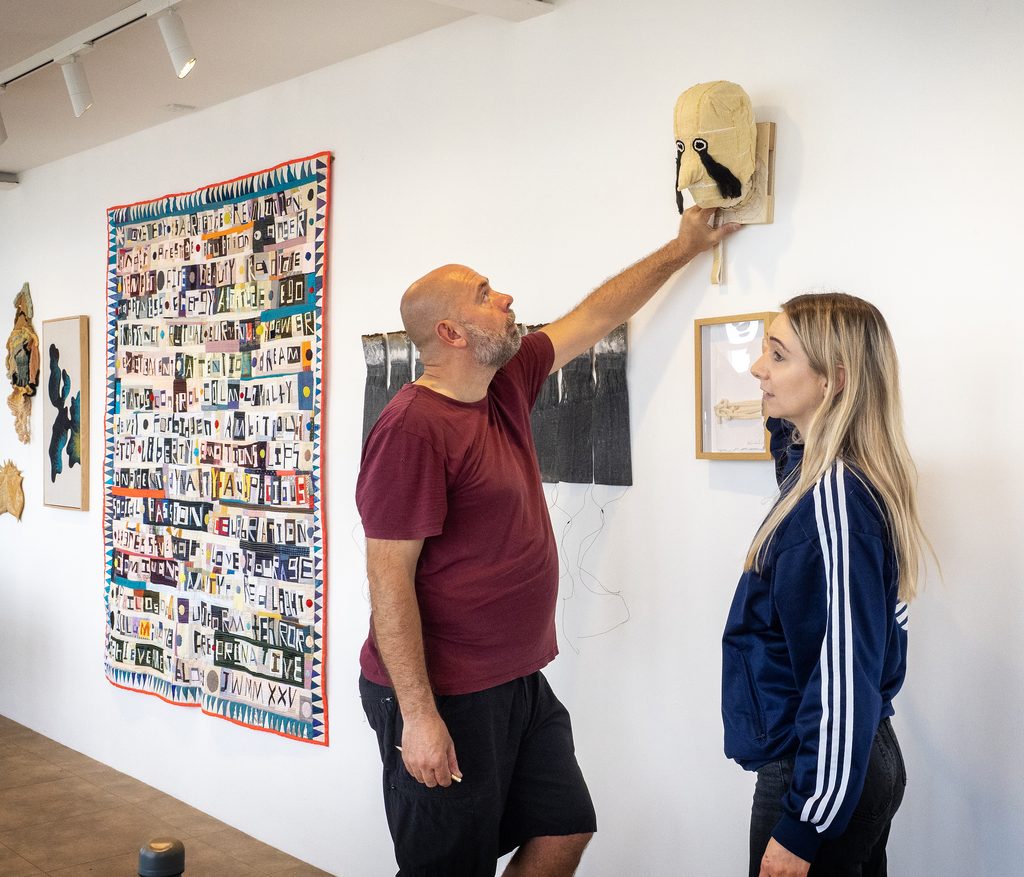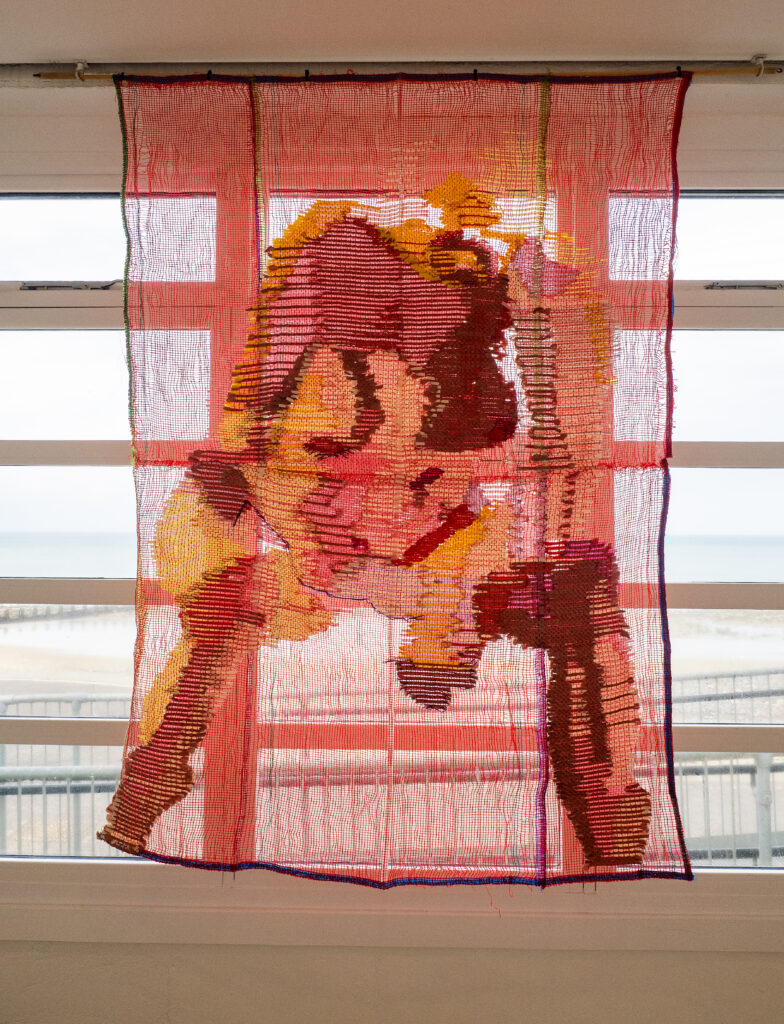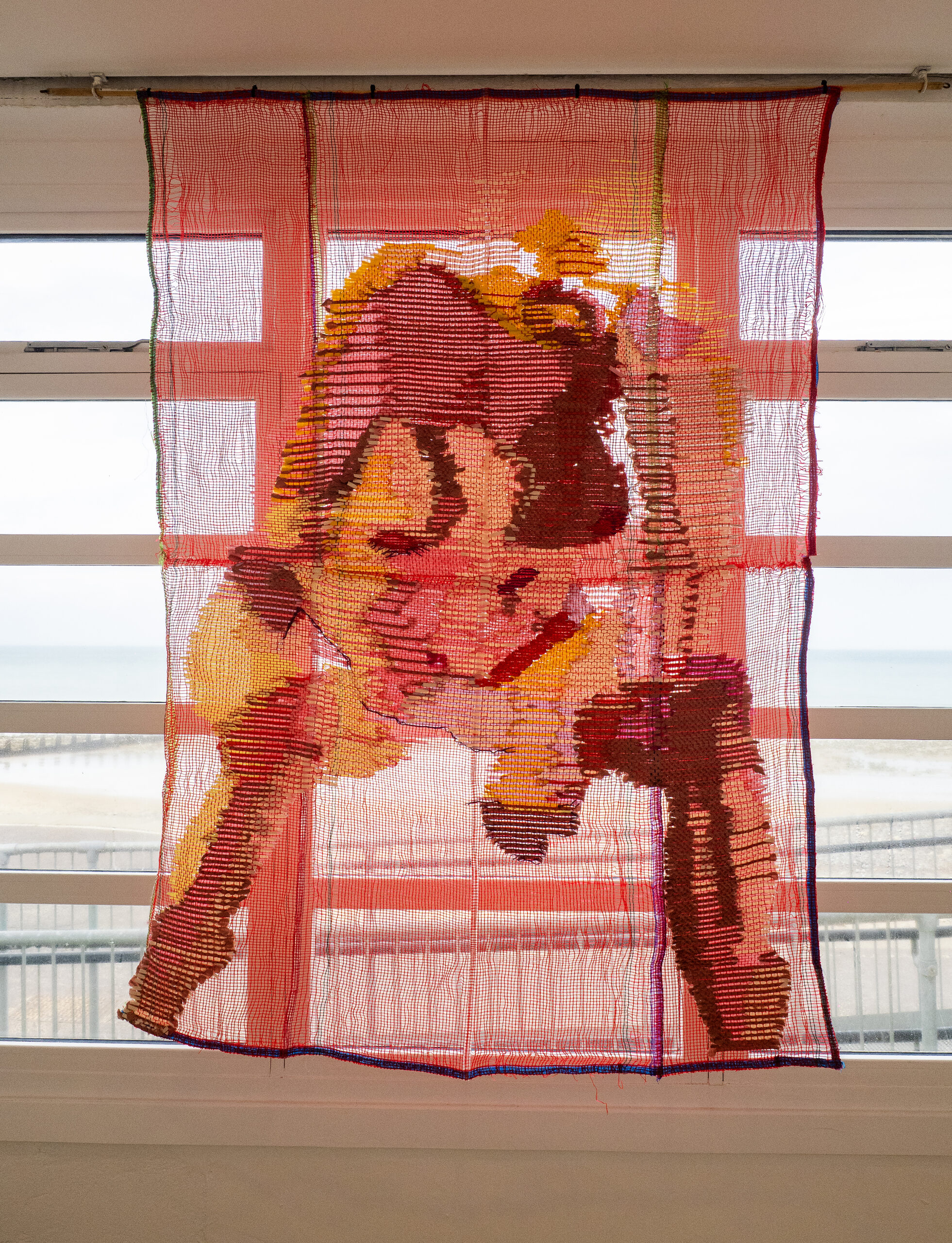
Textile art is often associated with comfort, tradition and care. Yet the artists brought together in Cliff Edge: Textile Art on the Brink reveal a medium that is equally capable of confronting uncertainty, disruption and profound social change. Featuring more than fifty artists from the UK and around the world, the exhibition explores what it means to stand at an edge, whether environmental, political, personal or cultural.
The title Cliff Edge is rooted in the dramatic North Norfolk coastline, where erosion provides a powerful metaphor for transformation. Throughout the exhibition, textiles become a language for examining fragile systems, shifting identities and the complex relationship between destruction and renewal.
Many artists engage directly with environmental concerns. Anna Olsson’s Seagull at the Plastic Sea draws attention to plastic pollution and its devastating impact on marine ecosystems, while June Croll’s handwoven Fragile Shore evokes the layers of sea, saltmarsh, cliff and dune that characterise our changing coastline. Debbie Lyddon’s 9 Salt Vessels uses the corrosive qualities of salt to make visible the passage of time and environmental decay.
Elsewhere, artists address social and political fault lines. Anna Olsson’s Self-censorship questions the consequences of disinformation and growing hostility towards journalism, while Dr Jane Hattrick’s powerful sampler references the historic protest embroideries of Lorina Bulwer and reflects on contemporary attitudes towards disability and welfare. Vicky Ellis’s Migrants Lost commemorates those who have died attempting Channel crossings, transforming statistics into a poignant act of remembrance.
The exhibition also explores the ways textiles can hold personal memory and emotional experience. Sammi Eady’s Sunrise Drive reconstructs a remembered family home through fibre mapping, while Abigail Weston’s knitted work records lived experiences of obsessive compulsive disorder. In Speechless (Not All My Own Words), Jess Wheelahan reflects on communication, silence and the search for a voice in uncertain times.
Across the exhibition, materials themselves become active participants in the conversation. Recycled fabrics, discarded packaging, rusted surfaces, salvaged fishing rope and reclaimed textiles appear repeatedly. Artists such as Lizzie Kimbley, Natasha Day, Karol Szczur and Ayla Willaert transform waste materials into compelling works that challenge assumptions about value, permanence and consumption.
Many of the works embrace tension between making and unmaking. Lorna Pridmore’s painstakingly unravelled jacquard textile, Clare Thornthwaite’s deliberately disintegrating Falling Apart at the Seams, and Robeeta Cummings’s interactive Darnable Quilt all present deterioration not as failure but as a process of change and reflection.
Despite confronting challenging subjects, Cliff Edge is not a pessimistic exhibition. Running throughout is a spirit of resilience, creativity and care. The slow processes of weaving, mending, stitching and repair become acts of resistance against disposability and forgetting. Artists such as Rezia Halima Wahid, Charlotte Little and Jenny Waterson explore cultural inheritance, community and identity, demonstrating how textile practices can connect past, present and future.
The international scope of the exhibition brings together voices from Sweden, Greece, Portugal, Belgium, the Netherlands, South Korea, Canada, Australia, the United States and across the United Kingdom. While their approaches differ widely, the artists share a preoccupation with moments of instability and transition, asking how we navigate a world that often feels poised on the brink.
Cliff Edge: Textile Art on the Brink reminds us that textiles are far more than decorative objects. They carry stories, protests, memories, identities and hopes. Through weaving, embroidery, quilting, felting, crochet and experimental textile practice, these artists demonstrate the power of cloth to help us understand the uncertainties of our time and imagine possibilities beyond them.
Until 14 October 2026.